
Getting Gratiot County Court Records
A docket or case index tells you a case exists and lists its events. The record behind that entry might be a filing, an order, or a judgment. It could also be an exhibit, a register of actions, or a recording. Begin with the court and the complete case number. You can search public case-index information through MiCOURT Case Search. There is no universal free document viewer. Use the index to identify the court. Then ask that court's clerk for the record you want.
For 65B District Court files, submit the court's Record/Copy Request form. Or send the same case and party details. The form lets you request review or copies. You might want a whole public file, a single document, or a recording. The district court takes records work in person, by mail, phone, fax, or email. Circuit records belong to the County Clerk. Probate records go to Probate Court. Sensitive family or juvenile records go to the office responsible for them.
- Locate the court and the full case number. If the number is unknown, confirm the court and party name through MiCOURT or the clerk.
- Name the product needed: inspection, a specific filing, a register of actions, a recording, a complete public file, or a certified copy.
- Send the district request by the published in-person, mail, phone, fax, or email channel, or contact the correct circuit, probate, or family counter.
- Wait for the clerk to identify public portions, available formats, and any charge before release.
- Keep the case number and document title with the copy so it can be checked against the court record later.
Note: A public index can point you toward a record. It does not replace the official filing or the clerk-issued copy.
Gratiot 65B Court Record Choices
The 65B form asks you to make a choice up front. Do you want to review a record, or do you want copies? It also separates a complete public case file from a specific document or recording. A narrow request helps staff find the right material. It also avoids asking for parts that cannot be released. For audio or video, give the proceeding date. Also give the court, the case number, and which format you need.
Name the document itself whenever you can. Asking for a signed order beats asking for everything in a case. A register of actions is the chronological court listing; a filing is the paper itself. MiFILE/TrueFiling handles local civil filings. It is not a public court-record viewer. The clerk can confirm retention periods and any recording-copy fee for your request.
Note: A narrow document request is often easier for staff to locate. It beats an undifferentiated request for a complete file.
Court Record Types
A Michigan court record is more than the papers in a case file. The local 65B access order covers case files, registers of actions, and indexes. It covers video and audio recordings too. Notes, tapes, logs, and other records the court creates or keeps are included. An index hit is only a starting point. It is not a promise that every related document is online or public.
- Case files, including public pleadings and filings.
- Registers of actions and indexes that identify events.
- Orders, judgments, and other signed court rulings.
- Public exhibits or attachments when the court can release them.
- Audio, video, or digital recordings of a specified proceeding.
Public status can vary from item to item within one case. A clerk can identify an available public copy while leaving redacted, confidential, or sealed material out of the request.
Gratiot Court Records by Counter
Gratiot County splits its court records across several counters. Each court keeps its own case files. The 65B District Court holds district court records: traffic, misdemeanor, small-claims, and district civil matters. The County Clerk keeps circuit civil, criminal, and family records for the shared 29th Circuit Court. Probate runs a separate record office. Call the right counter first. This matters when all you have is a name and no case number.
65B District Court Records
245 E Newark Street
Ithaca, MI 48847
989-875-5240
A County Clerk name search only reaches Circuit Court records. The published form offers a ten-year search. It costs $12 per name, and it notes that the district court sets its own policy. One counter is not every Gratiot court. A search there is not a search of every county docket.
Note: Send circuit, district, and probate requests to their own record counters. Do not assume one office holds every local case file.
Inside a Gratiot County Court Record
Read a public court record as a set of related fields and documents, not a single conclusion. First confirm the case number and the court. Then tell apart the date a paper was filed. Keep that separate from when an order was signed, entered, served, or a case was disposed. Those dates mean different things. If you need a certified copy, keep the certification with the document instead of relying on a later scan.
| Case and court | The court name and case number identify the file to request. |
|---|---|
| Register of actions | A chronological listing of filings, events, and court activity. |
| Filing or document | The particular motion, petition, order, judgment, or exhibit requested. |
| Document date | Shows when a document was filed, entered, signed, or served when that status appears. |
| Access status | May show that material is public, redacted, nonpublic, confidential, or sealed. |
When all you have is the docket, a Gratiot County case lookup can confirm the case number before you request a copy. Keep the official document title intact. Do not reduce a judgment or order to a shorthand conclusion.
Gratiot Court Record Terminal Limits
Walk-in searching works at the 65B public terminal. It is a local machine for viewing public court records. No reservation is needed. Sessions run first-come from 8:30 a.m. to 4 p.m. The normal cap is 30 minutes each day. If nobody else is waiting, staff can stretch that time. Their help covers the mechanics of access, not legal advice. Live case work can pull staff away. The court points same-day record checks toward the 1:30 to 3:30 p.m. window instead.
The 65B access page spells out the terminal and printing instructions.
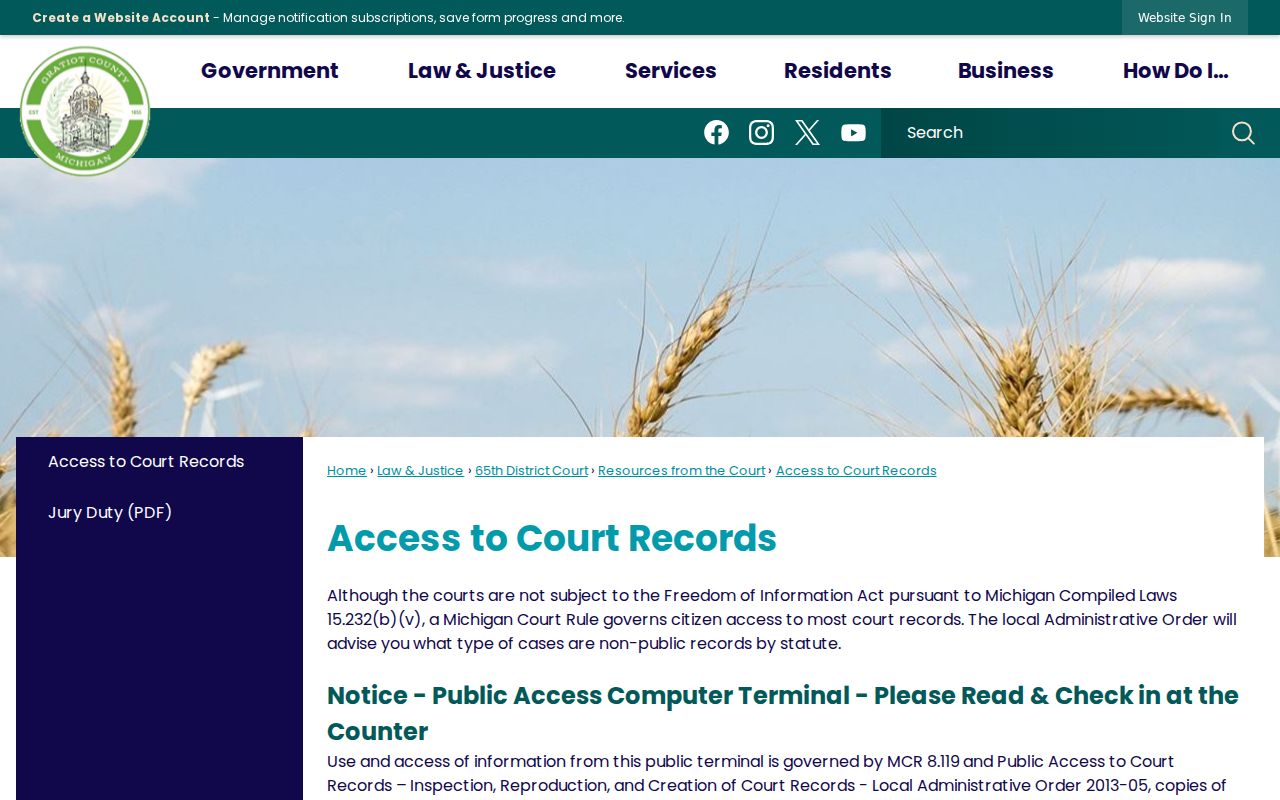
Since time is capped, come prepared. Bring the court, the case number, and a narrow document request already in hand. Printing at the clerk area costs $1 per page.
Older files take a slower path. Anything pre-1996 may live in manual index books at the counter rather than online. So a blank screen does not mean a historical Gratiot court record is missing.
Fees and Certified Copies
Know which product you are buying. A plain copy is just the document image or paper. A certified court record adds the clerk's certification. It carries a separate per-document charge listed in the published County Clerk schedule. That schedule is marked effective October 1, 2026. That is a future-effective date. Confirm the current clerk schedule before you order or rely on any amount.
| Record product | Published amount |
|---|---|
| Plain photocopy | $1 per page |
| Certified court record | $10 per document, plus $1 per page |
| Court record on CD | $25 or the page rate |
| Emailed document | $4 |
| Circuit Court name search | $12 for ten years, per name |
Match the request to the product. An emailed document is not a certified copy, and paying the circuit name-search charge will not turn a district or probate request into a circuit search.
Note: These fees are published future-effective amounts, so the court's current schedule controls any request placed later.
Michigan Court Records and FOIA
Court case records in Michigan sit outside the ordinary county FOIA process. MCL 15.232 leaves courts out of the public-body definition. The definition covers this purpose only. County budgets and policies can still go the FOIA route. A judicial case file, register, order, or recording follows court-record access rules instead. Route a court-file request through county FOIA. It may land in the wrong office.
Go direct. Start with the MiCOURT public index. Then turn to the court that keeps the file for inspection or copies. For a 65B file, the local request form applies. The access policy lays out the path too. Circuit and probate material belongs with the clerk or probate counter that maintains it.
Sealed Records and Public Access
MCR 8.119 governs court-record access in Michigan. Public case records are generally open. The rule also recognizes nonpublic, sealed, confidential, and otherwise restricted material. Redaction can strip protected details from a public copy. A case may exist yet hold back parts of its file. A no-result or limited result may reflect an access rule rather than a missing case.
Access rules:
MCR 8.119 governs public court records, copying, redaction, and reasonable access procedures.
MCR 1.109 governs protected personal-identifying information in Michigan filings.
Local Administrative Order 2013-05 applies the 65B access process.
MCL 15.232 explains why ordinary county FOIA is not the court-file route.
The official MCR Chapter 8 source sets out the statewide court-record framework.
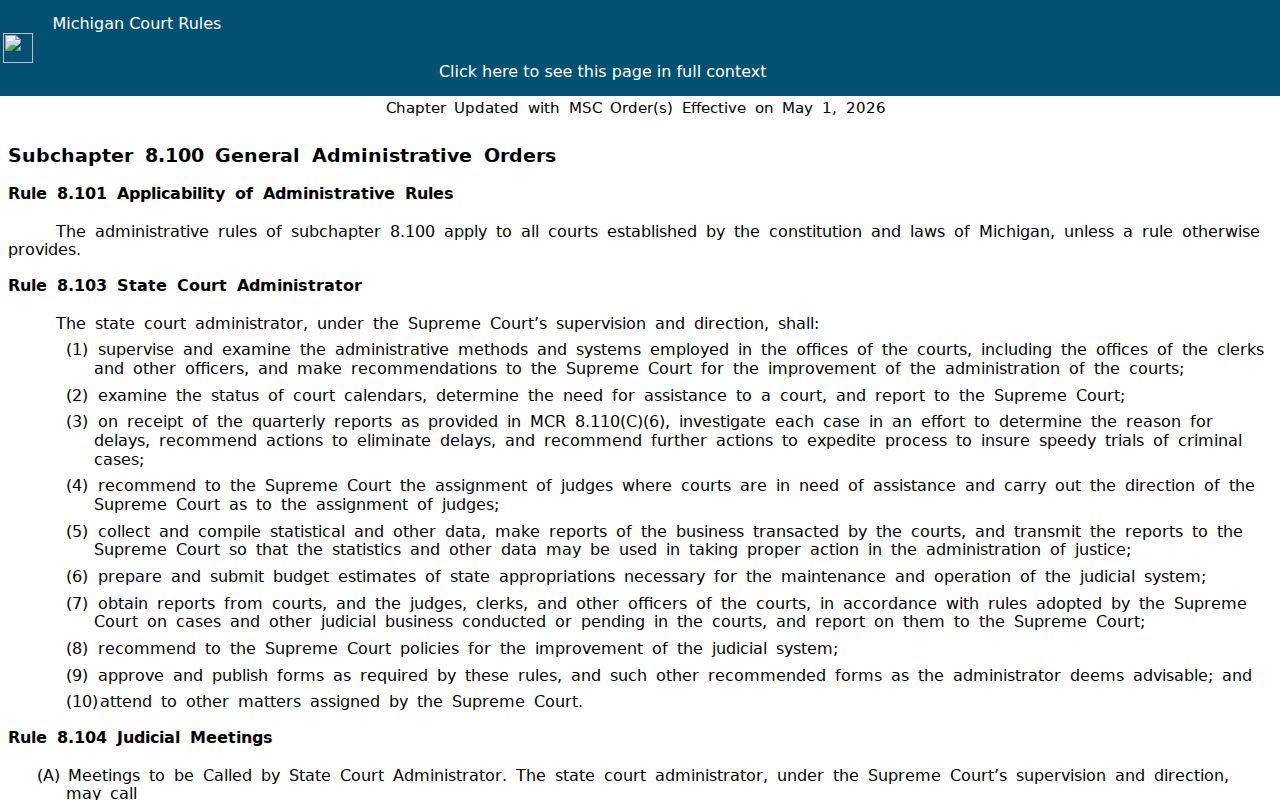
That rule plus the local process explain a common situation. The clerk hands over the public portion of a Gratiot case file while withholding the sealed or nonpublic portion of the same file.
Gratiot Court Record Request Check
Run a quick check before filing a Gratiot court record request. Confirm the court, case number, document title, and format you want. Ask whether the record is public. Ask whether a plain, certified, emailed, CD, inspection, or recording product exists. This step cuts delays. Sending a district request to circuit records wastes time. So does asking for an index when a filing is needed. Reading an online result as the whole file does too.
For public inspection, follow the clerk's handling rules. Never remove a file from the court. Older 65B material may require manual index research. Ask first. When a record is nonpublic or sealed, the clerk can explain the access process. Release still depends on the governing rule, statute, or court order.